xAI Colossus Expansion: $659M Memphis Permit Filed
xAI filed a $659M permit for a 312,000 sq ft building next to Colossus 2 in Memphis, pushing its Tennessee campus toward a 2-gigawatt AI compute target by 2027.
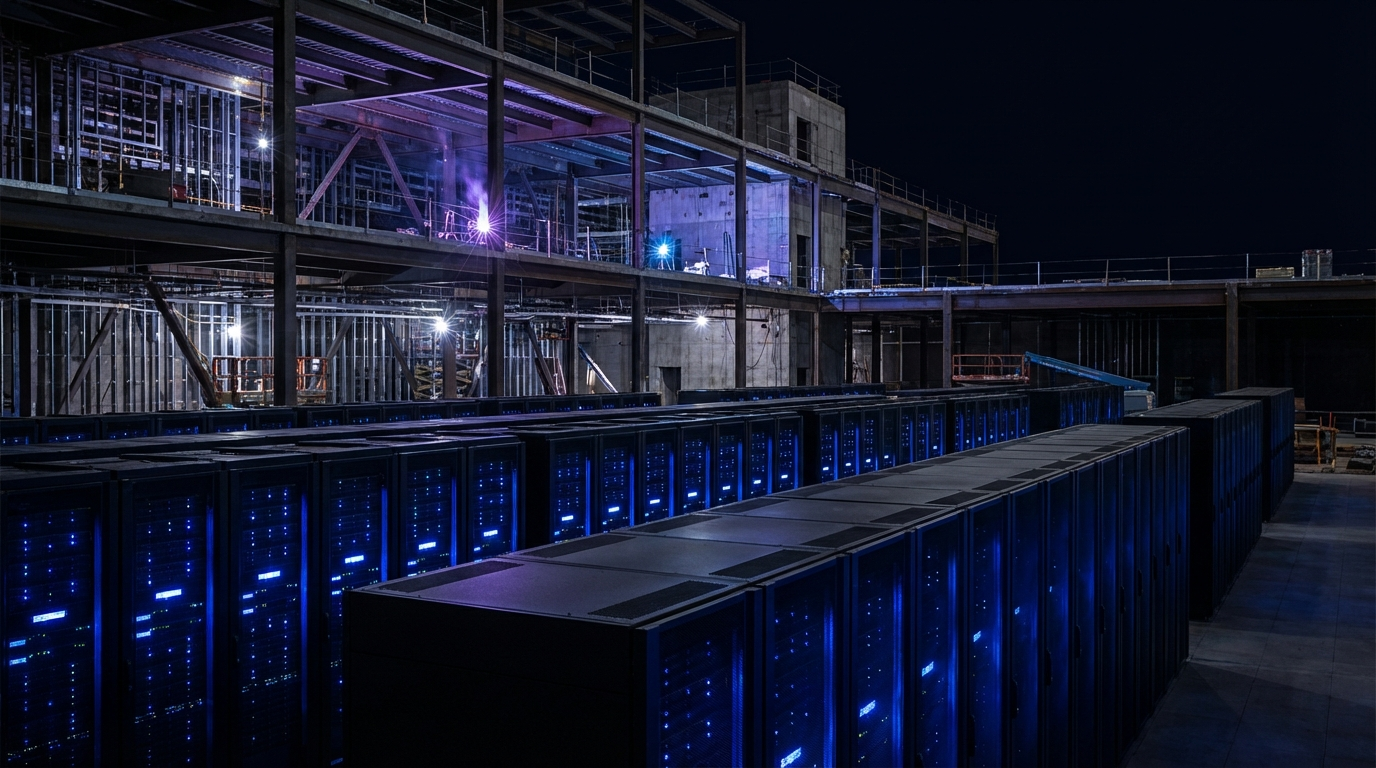
The xAI Colossus expansion in Memphis is moving into a new phase. Elon Musk’s artificial intelligence company has filed a $659 million construction permit for a new building at its Memphis data center complex, the latest sign that the race for raw AI compute capacity is only accelerating. The permit, submitted to the Memphis and Shelby County Division of Planning and Development by xAI affiliate MZX Tech, covers a four-story, 312,000-square-foot structure on a 79-acre parcel at 5414 Tulane Road, directly adjacent to the company’s Colossus 2 data center site.
The proposed building stands approximately 75 feet high. The specific function of the facility has not been disclosed in permit documents, but the site’s location within xAI’s growing Memphis data center cluster leaves little ambiguity about its purpose: expanding the compute infrastructure that powers Grok, the company’s flagship large language model.
From Repurposed Factory to a Two-Gigawatt Ambition
xAI’s Memphis footprint has grown at a pace that rivals even the most aggressive hyperscaler buildouts. The company first entered the area in mid-2024, constructing its original Colossus supercomputer inside a repurposed Electrolux factory in Memphis’s Boxtown district in just 122 days. That facility went fully operational in December 2024, housing approximately 100,000 Nvidia H100 GPUs.
Colossus 2 followed quickly. xAI acquired land for the second data center in March 2025, and the facility came online in January 2026. The newly filed permit extends the campus yet again, adding a third building to what is rapidly becoming one of the most concentrated AI compute clusters in the world.
Musk has stated publicly that the broader Memphis campus is intended to eventually provide access to approximately two gigawatts of compute power. A third data center is also planned for a site across the Tennessee-Mississippi border, further extending the cluster’s geographic reach.
Power Commitments and the Cost of Scale
Infrastructure at this scale demands power infrastructure to match. During a White House event, SpaceX President Gwynne Shotwell stated that xAI would develop 1.2 gigawatts of power for its supercomputer facility, framed as part of the administration’s “Ratepayer Protection Pledge.” The commitment signals that xAI is not merely acquiring GPUs but also building the energy backbone required to run them continuously.
The $659 million permit alone represents a substantial single-facility investment. When stacked against the capital already deployed for Colossus and Colossus 2, xAI’s total Memphis infrastructure spend now runs into the billions. That level of commitment reflects a strategic calculation: Grok’s competitive position in the LLM market depends directly on having more compute available than rivals can match.
The compute arms race has become a defining feature of frontier AI development. OpenAI’s $110 billion funding round earlier this month was partly justified on the same logic: that whoever controls the most inference capacity controls the trajectory of the market. xAI is making the same bet, but through direct infrastructure ownership rather than cloud procurement.
What the Expansion Signals for Grok
Grok’s current capabilities run across xAI’s existing Memphis hardware. The addition of 312,000 square feet of new facility space, assuming it follows the pattern of the existing Colossus campuses, would accommodate thousands of additional GPU units and the cooling, power distribution, and networking infrastructure needed to run them at scale.
More compute translates directly to more training capacity for next-generation Grok models, lower inference latency at high query volumes, and the ability to run experimental workloads in parallel without constraining production traffic. For xAI, the Memphis build-out is not just a logistics story. It is the physical expression of the company’s theory that the AI models with the most hardware behind them will ultimately set the performance ceiling that everyone else races to meet.
The broader dynamics of this infrastructure push connect to a structural shift examined in The Inference Economy: as AI models move from research artifacts to continuously running commercial services, the cost of inference at scale becomes the primary operational constraint shaping which companies can sustain competitive models. xAI’s Memphis expansion is a direct response to that constraint.
With construction timelines in the data center industry typically running 12 to 24 months for facilities at this scale, the Tulane Road building would be expected to come online in late 2027 at the earliest, lining up with what the company likely projects as the window for its next major model generation.
The Competitive Context: Why Memphis Matters
xAI’s bet on owned infrastructure rather than leased cloud capacity is a strategic departure from how most AI labs have historically operated. Renting GPUs from hyperscalers offers speed and flexibility in the early stages, but at sustained scale the unit economics shift decisively toward ownership. By building its own campuses, xAI locks in long-term cost structures that cloud procurement cannot match at the same throughput volumes.
Memphis itself was not an obvious choice for a frontier AI campus. The city lacks the established tech ecosystem of Northern Virginia or the Bay Area. What it offers instead is available industrial land, proximity to reliable power grid infrastructure, and a regulatory environment that allowed xAI to move from land acquisition to operational facility in record time. The original Colossus came online in 122 days from groundbreaking, a pace that no hyperscaler’s managed data center construction process has matched at equivalent scale.
That execution speed is now being tested again. Filing a permit for a $659 million building does not guarantee a 122-day timeline for a four-story, 312,000-square-foot structure. But it signals that xAI is not pausing to assess whether the current infrastructure is sufficient. The company is building ahead of demand, betting that compute availability will attract workloads rather than waiting for workloads to justify the build.
For competitors tracking xAI’s trajectory, the Memphis campus now represents a durable hardware advantage that cannot be neutralized by a funding announcement alone. Owning two gigawatts of compute capacity, when complete, puts xAI in infrastructure territory occupied only by the largest cloud providers. The question the industry will watch is whether Grok’s model quality justifies the scale that the infrastructure is being built to support.
Sources: Memphis Business Journal, Data Center Dynamics, Action News 5, Teslarati, wreg.com