Oracle Stargate: $50B AI Data Center Bet Faces First Test
Oracle reports Q3 earnings as OpenAI pulls back from Stargate expansion, raising questions about its debt-fueled AI data center buildout and chip cycle timing.
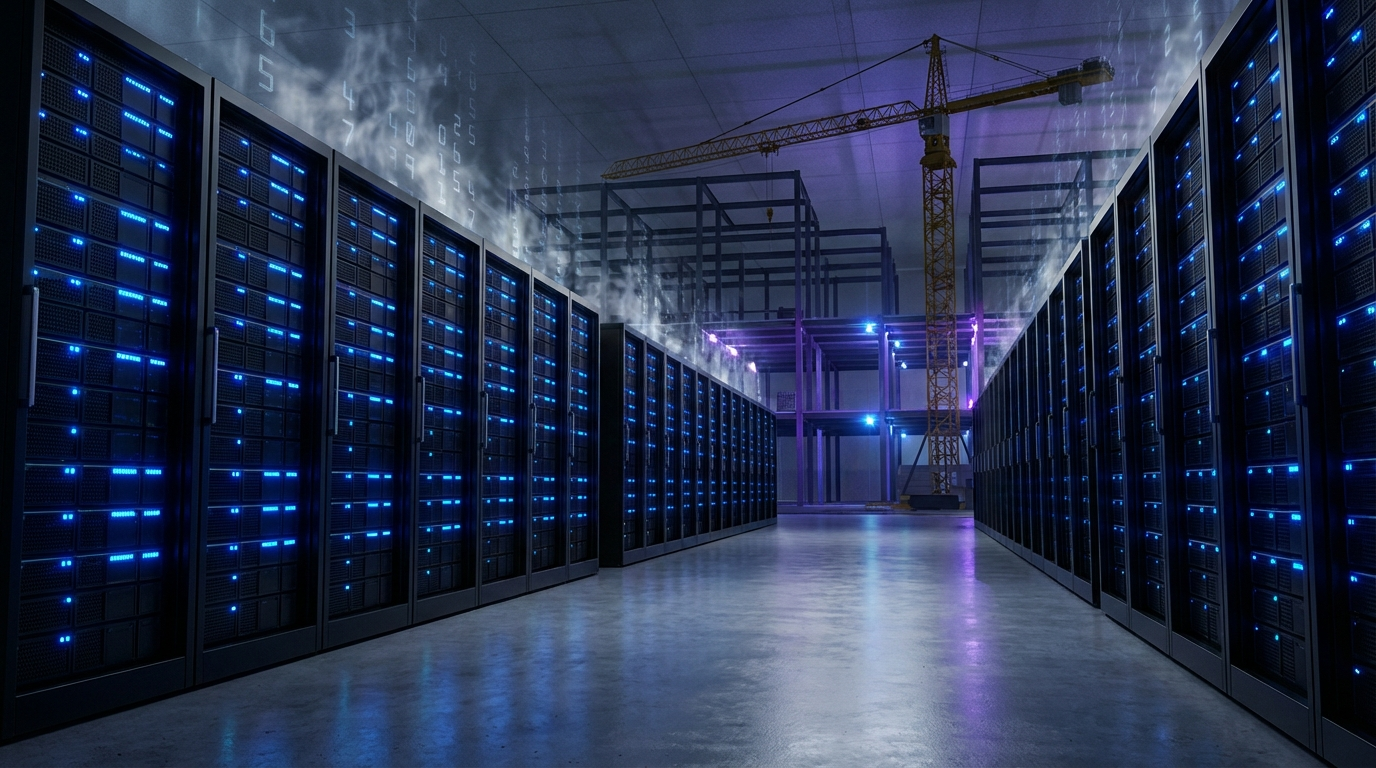
The Oracle Stargate partnership with OpenAI was supposed to be the foundation of Oracle’s AI cloud dominance. Today, as the company reports fiscal third-quarter 2026 earnings, that foundation is showing cracks.
Oracle has committed $50 billion in AI capex to building data center infrastructure for the next decade of cloud computing. But the question emerging today is whether that AI infrastructure is already becoming the past. The enterprise software and cloud giant reports fiscal Q3 2026 results tonight after market close, with Wall Street expecting revenue of $16.9 billion, a 20% year-over-year increase. The headline number will matter less than what Oracle says about a new problem that has surfaced at its flagship Stargate facility in Abilene, Texas.
OpenAI Walks Back on Stargate Expansion
OpenAI is no longer planning to expand its partnership with Oracle at the Abilene facility, according to a person familiar with the matter cited by CNBC. The reason: OpenAI wants clusters built around newer generations of Nvidia graphics processing units, and the current site is slated to use Blackwell processors with power not projected to come online for another year.
By the time Abilene is ready, OpenAI expects access to Vera Rubin, Nvidia’s next-generation AI chip that delivers five times the inference performance of Blackwell. For a company whose revenue and valuation track benchmark rankings in near real-time, waiting 12 months for hardware that is one generation behind is not an option.
Oracle pushed back, calling news reports “false and incorrect” in a post on X on Sunday. But the response only confirmed that existing projects remain on track without addressing the expansion question directly.
The Core Tension: Chip Cycles vs. Construction Timelines
The Abilene situation exposes a structural problem that extends well beyond Oracle. Building a hyperscale AI data center takes 12 to 24 months at minimum from site acquisition to power-on. Nvidia now ships a new generation of data center GPUs every year, a pace Jensen Huang has explicitly accelerated. Nvidia’s Vera Rubin and N1X architecture represents a generational leap, purpose-built for the agentic workloads that frontier labs are now racing to deploy at scale.
The math is punishing: commit to a site today, and by the time it is operational, the hardware you ordered may already be one generation behind what your largest customers want. For Oracle, which lacks the recurring cash flows of AWS, Google Cloud, or Azure, this timing mismatch carries direct financial exposure.
Oracle is funding its $50 billion capex cycle almost entirely with debt, a figure now exceeding $100 billion in total obligations. In Q2 the company generated negative $10 billion in free cash flow. Google, Amazon, and Microsoft are financing comparable buildouts from operating cash flow generated by diversified businesses. Oracle does not have that cushion. Blue Owl, one of its infrastructure financing partners, has already declined to fund an additional facility.
What Tonight’s Earnings Need to Show
Wall Street consensus expects $1.70 in earnings per share on $16.92 billion in revenue for Q3. The headline numbers matter less than three specific data points analysts will focus on.
Remaining Performance Obligations (RPO): Oracle’s RPO reached $523 billion in Q2, up 438% year-over-year. That backlog, representing contracted AI cloud revenue not yet recognized, is the primary bull case for the stock. Any slowdown in RPO growth will be read as a sign that new AI deals are drying up faster than old ones convert to revenue.
OCI Revenue Growth Rate: Oracle Cloud Infrastructure has been growing above 40% annually as hyperscalers and AI companies seek alternatives to AWS and Azure capacity constraints. Deceleration here is the single largest bear risk.
Guidance on the Capex Plan: After raising its FY2026 capex estimate by $15 billion mid-cycle, Oracle needs to either stabilize that number or justify further increases with concrete demand evidence. The Stargate initiative connecting Oracle, OpenAI, and SoftBank is the centerpiece of the bull case, and any softening in that partnership will register across the entire program’s outlook.
The stock is down 22% year-to-date heading into tonight’s report, a level that already prices in meaningful execution risk.
The Bigger Question Behind the Numbers
The Oracle situation surfaces a question the entire AI infrastructure industry will need to answer over the next 12 months: can traditional capital allocation timelines coexist with annual Nvidia hardware generational cycles?
Oracle is betting that demand is large enough, and that customer switching costs are high enough, that enterprises will accept some hardware lag in exchange for capacity certainty. The Stargate contracts represent exactly that logic. But OpenAI’s retreat on expansion suggests that the largest AI customers, the ones who set the benchmark rankings and drive developer mindshare, are not willing to accept that tradeoff at scale.
Tonight’s earnings will not resolve the question. But they will reveal how seriously Oracle’s management believes it is actually a problem.