Nvidia's GTC 2026: The Bid to Own the Full AI Stack
Jensen Huang used GTC 2026 to position Nvidia as the full operating layer for the agentic AI economy, from the Vera Rubin platform to NemoClaw.
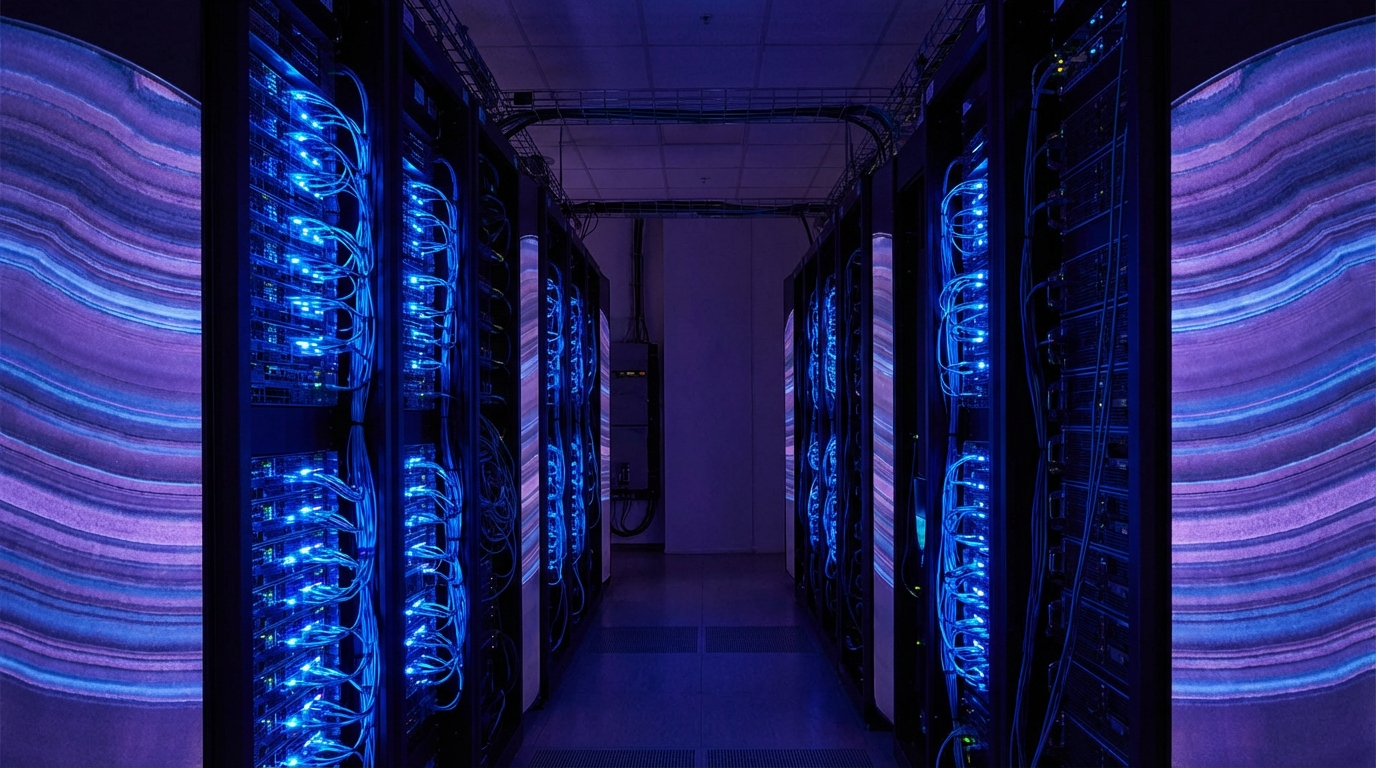
Three days into Nvidia’s GTC 2026, the picture is clear: this was not a product launch. It was a statement of intent. Jensen Huang spent nearly three hours on the SAP Center stage on Monday laying out a roadmap that positions Nvidia not as a GPU vendor but as the foundational operating layer for the entire artificial intelligence economy. The chips are part of it. So are the software platforms, the agent frameworks, the data center architectures, the sovereign cloud deals, and the token economy emerging around inference compute.
The $1 trillion revenue forecast through 2027 is the headline number. But the deeper story is structural. Nvidia is executing a vertical integration play that, if it holds, will make it as essential to the AI era as AWS was to the cloud era, and potentially more so.
The Vera Rubin Platform: Seven Chips, One System
The centerpiece hardware announcement was the Vera Rubin full-stack computing platform, comprising seven chips, five rack-scale systems, and one purpose-built supercomputer for agentic AI workloads. The platform includes the new Vera CPU and BlueField-4 STX storage architecture.
Huang framed Vera Rubin as extreme codesign taken to its logical conclusion: “When we think Vera Rubin, we think the entire system, vertically integrated, complete with software, extended end to end, optimized as one giant system.” The goal is to push down token cost (the per-inference expense that determines whether deploying AI agents at scale is economically viable) to a level no competitor can match through software optimization alone.
The follow-on architecture, Feynman, was also previewed. It pairs a next-generation LPU called LP40 with the NVIDIA Rosa CPU, named for Rosalind Franklin, alongside BlueField-5 and CX10 interconnects. Rosa is positioned as the memory and data movement engine for agentic infrastructure: moving tokens, tool calls, and model state across large distributed systems with minimal latency. The naming choice is deliberate signaling: as Franklin decoded the hidden structure of DNA, Rosa is meant to decode and move the hidden structure of AI computation.
Huang made a pointed remark about the compute demand curve: “I believe computing demand has increased by 1 million times over the last few years.” The Blackwell and Vera Rubin order pipeline, now forecast at $1 trillion through 2027, is his evidence that the infrastructure buildout is still in its early innings.
NemoClaw and the Agent Platform Play
Beyond silicon, the most strategically significant announcement was NemoClaw, a new AI agent development platform named, per CNET’s reporting, in direct homage to OpenClaw. The move is not subtle. Nvidia is embedding itself into the agent ecosystem by providing the developer tooling layer that sits between raw GPU compute and deployed autonomous systems.
Nvidia also announced formal platform support for OpenClaw across its entire infrastructure stack, making it easier for developers to build, deploy, and scale AI agents on Nvidia-powered hardware. This is a meaningful signal. OpenClaw has been the dominant agentic framework of early 2026; Jensen Huang called it “definitely the next ChatGPT” in a CNBC Mad Money interview this week. For Nvidia to build native tooling around it is an acknowledgment that the model-centric era is over and the agent-execution era has begun.
The strategic logic is straightforward: every OpenClaw agent deployed at scale runs on compute. If Nvidia controls the compute substrate, the developer tooling, and the deployment infrastructure, it captures value at every layer of the stack, not just when GPUs ship, but on every inference call thereafter.
The $2 Trillion Infrastructure Land Grab
GTC 2026 did not happen in a vacuum. It is the public capstone of a multi-month infrastructure acquisition binge that has reshaped the AI industry’s physical footprint.
The defining deal of early 2026 has been the formalization of a strategic partnership between Nvidia and OpenAI to deploy 10 gigawatts of dedicated AI data center capacity, enough to power roughly seven million homes. Reports indicate Nvidia is also negotiating a $30 billion direct equity stake in OpenAI, a move that would transition the company from hardware vendor to primary stakeholder in the world’s most advanced AI research lab.
Simultaneously, Project Stargate, the $500 billion investment consortium led by SoftBank, OpenAI, and Oracle, is building purpose-built AI superclusters on U.S. soil. The consortium has acquired power permits, land, and water rights at a pace that resembles the early railroads more than a software industry.
The Big Five hyperscalers are on track to collectively spend $720 billion in capital expenditures this year. That number is not going into cloud hosting for web apps. It is going into dedicated AI factories: GPU clusters, liquid cooling systems, high-speed interconnects, and the energy infrastructure to run them continuously.
Nvidia moved to secure the bottleneck layer in this buildout with a $2 billion investment in Coherent Corp, targeting silicon photonics and specialized optics, the components that become the limiting factor when you try to scale a cluster past 100,000 GPUs. This is the infrastructure version of buying the railroad before the train.
Sovereign AI: The $200 Billion Secondary Wave
One of the less-discussed but significant angles from GTC is the sovereign AI buildout. Countries including Saudi Arabia, the UAE, Japan, and Germany are moving to establish independent AI infrastructure rather than depend entirely on U.S. hyperscalers.
Germany announced plans to double domestic data center capacity and increase AI processing capacity fourfold by 2030. These are not theoretical investments. They reflect Berlin’s assessment that AI compute is now a strategic national asset, equivalent to energy reserves or semiconductor fabs.
Analysts project the sovereign cloud infrastructure market will reach $200 billion by 2027. For Nvidia, this represents a hedge against any domestic slowdown in hyperscaler spending and an expansion of the total addressable market beyond the five companies that have dominated AI infrastructure investment to date.
The T-Mobile-Nvidia partnership announced at GTC offers a model for how this extends further. T-Mobile is deploying Nvidia hardware on cell tower infrastructure to run AI inference at the network edge, distributing compute geographically rather than concentrating it in megacampuses. If this pattern holds across telecom providers globally, the demand for Nvidia’s edge-optimized hardware extends well beyond data centers.
The Thermal Wall and Who Wins the Physical Constraints Race
As AI rack density has crossed 100kW per rack, a threshold that traditional air cooling cannot handle, the physical constraints of the data center have become a competitive differentiator. Companies that control liquid cooling, power delivery, and thermal management are emerging as essential infrastructure partners rather than commodity suppliers.
Eaton’s $9.5 billion acquisition of Boyd Thermal in early March is a direct response to this. Microsoft and Meta are both retrofitting server farms to handle the thermal load of Blackwell and Vera Rubin deployments. The companies that failed to invest in liquid cooling infrastructure early are now experiencing what engineers are calling “compute poverty,” the inability to run competitive models because their physical plants cannot handle the heat output.
This thermal constraint is also reshaping the economics for mid-tier AI labs. Without the balance sheets to build or retrofit the necessary facilities, they are being squeezed toward GPU-as-a-service providers, known as “neoclouds,” for guaranteed compute access. Meta signed a $27 billion multi-year capacity deal with Nebius, a GPU specialist, underlining that even the largest tech companies are outsourcing portions of their infrastructure to maintain flexibility.
The Token Economy and What Inference Scarcity Changes
Huang introduced the token as the “basic unit of modern AI” in the GTC keynote opening. That framing is more consequential than it sounds. In a world where AI token budgets are becoming a standard compensation item (Huang proposed giving Nvidia engineers annual token allocations alongside salaries), inference compute is becoming a resource with scarcity value, not just a cloud line item.
This changes the calculus for AI infrastructure investment in a fundamental way. When tokens are scarce, whoever controls inference capacity controls a genuine economic choke point. Nvidia’s stated goal is to be the “inference king,” the company that provides the lowest cost per token at the highest throughput. If Vera Rubin delivers on that promise, it means every model deployed, every agent call made, every enterprise AI workflow run will generate returns for Nvidia’s infrastructure stack, not just at the point of GPU sale.
The $5 trillion market cap Nvidia now carries is a bet that this inference economy is durable and that Nvidia’s codesign approach, optimizing silicon and software together, is difficult enough to replicate that the moat widens over time. Three days into GTC 2026, Jensen Huang made the most coherent case yet for why that bet might be right.